Have you ever bought something that looked incredible in the store, only for it to sit unworn in your wardrobe? You’re definitely not alone.
In fact, studies suggest that most people wear just 10–20% of their clothes around 80% of the time. The rest often turns into clutter, guilt, and wasted money.
But it doesn’t have to stay that way.
Sustainable style isn’t only about choosing ethical brands or organic fabrics—it’s really about making intentional decisions so that every item in your wardrobe works for you. Even if a piece isn’t made from traditionally sustainable materials, if you wear it often and get great use from it, it still earns its place as a “sustainable” choice in your wardrobe.
So, how do you start making better decisions?
That’s where the 5-4-3-2-1 Rule comes in—a simple and effective framework to help you shop more intentionally, slow down your decisions, and build a wardrobe that feels cohesive, flattering, and truly you.
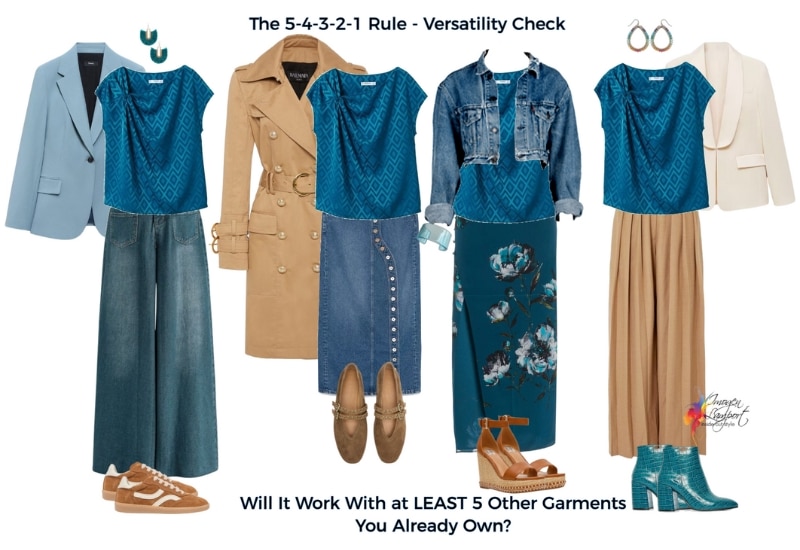
5 – Versatility Check
Question: Can this piece be worn with at least five items you already own?
This isn’t only about whether the colours match—although choosing pieces within your colour palette certainly helps. It’s also about how many different outfit combinations you can create.
The more ways you can style one item, the more value it adds to your wardrobe.
Example:
That deep teal blouse you’re considering—could you pair it with your cream blazer, blue blazer, denim skirt, camel trousers, and a printed midi skirt? If so, it’s already proving its versatility and worth.
Why It Matters
Versatility helps solve those “nothing to wear” mornings. When your wardrobe pieces mix and match easily, you actually need fewer items overall.
4 – Personal Style Alignment
Question: Does this piece align with your personal style in terms of colour, comfort, personality, and figure flattery?
If it doesn’t meet all four of these criteria, it’s likely to become one of those “meh” items—the kind you try on, take off, and never wear again.
- Colour – Does it complement your natural colouring and brighten your face?
- Comfort – Can you move freely and feel at ease without constantly adjusting it?
- Personality – Does it feel authentically like you, or like you’re wearing someone else’s style?
- Body Harmony – Does it highlight the features you love and suit your proportions?
Why It Matters
Even a beautiful colour won’t get worn if the cut isn’t flattering. And a great shape in the wrong colour can still feel off. To truly work, a piece needs to bring everything together.
3 – Frequency Test
Question: Can you realistically see yourself wearing this piece at least three times a month during its season?
It’s easy to be drawn in by something new and exciting, but the true value in your wardrobe comes from the items you reach for again and again.
Example:
That tailored wool coat may be more expensive than a polyester one, but if you wear it regularly over three winters, its cost per wear becomes much lower. Plus, because it’s made from a higher-quality material, it will continue to look good for longer.
Why It Matters
The more frequently you wear a piece, the more sustainable it is—both financially and environmentally.
2 – Longevity Lens
Question: Will you still want to wear this item in two years or more?
This means thinking beyond current trends and considering how well the piece will last in terms of style, quality, and how it fits your lifestyle.
Ask yourself: